Demographic Turn
A decade after India attained independence, Aldous Huxley, an English writer and philosopher, was deeply pessimistic about the future of Indian culture that he had studied and long admired.
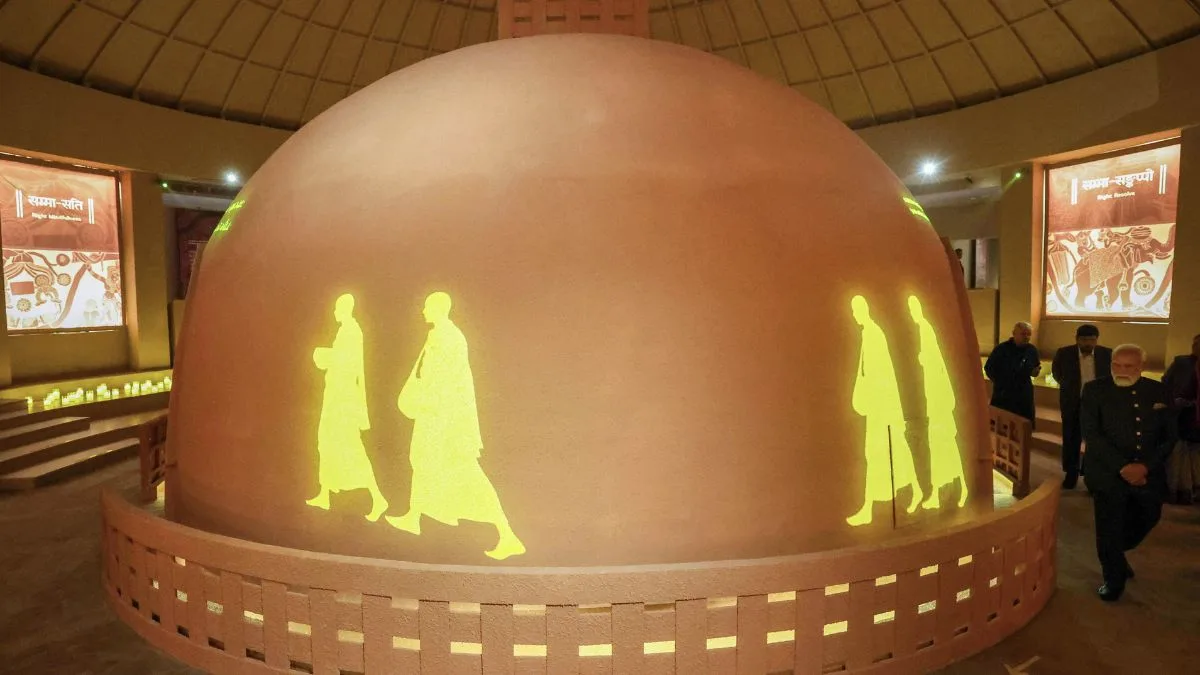
On the occasion of the inauguration of the Grand International Exhibition of the Sacred Piprahwa Relics by Prime Minister Narendra Modi, a panel discussion on “Buddhist Philosophy” was organised at the Rai Pithora Cultural Complex, New Delhi.




File Photo: ANI
Describing the Piprahwa relics as living reminders of the Buddha’s message, a forum of eminent scholars discussed that Buddhism’s global acceptance is rooted in its philosophical depth and ethical universality.
On the occasion of the inauguration of the Grand International Exhibition of the Sacred Piprahwa Relics by Prime Minister Narendra Modi, a panel discussion on “Buddhist Philosophy” was organised at the Rai Pithora Cultural Complex, New Delhi.
Advertisement
The session was chaired by Prof Siddharth Singh, Vice-Chancellor, Nava Nalanda Mahavihara (Deemed University), Nalanda. In his address, Prof Singh observed that the Buddha’s teachings spread across the world not through force or coercion, but through dialogue, ethical conduct, and personal example.
Advertisement
He emphasised that Buddhism, like other Dharma-based traditions, seeks the purification of the human mind and the alleviation of suffering rather than proselytisation. He further noted that the Buddha’s relics continue to sustain living traditions by connecting contemporary practitioners with the historical Buddha, and that the repatriation of the Piprahwa relics represents an act of shared stewardship rather than ownership.
Panelist Prof Nalin Kumar Shastri stated that the repatriation of the Piprahwa relics reflects the renewed relevance of Buddhist philosophy as a guide for peace and integrated national development. He highlighted that Buddhist thought bridges ancient wisdom with contemporary concerns such as ethical governance, environmental sustainability, and mental well-being.
Prof Anand Singh highlighted that the relics of the Buddha and his disciples function as symbolic embodiments of the Dhamma, integrating both the living presence of the Buddha and his teachings.
Prof Bala Ganpathi reaffirmed India’s civilisational role as the Motherland of Dhamma and observed that Buddhist philosophy offers a practical and humane framework for peace, coexistence, and moral clarity in an increasingly fragmented world.
Prof Rajnish Mishra underscored the deep philosophical and textual continuities between Buddhist and classical Indian thought, highlighting the shared intellectual milieu of Śramaṇic and Brāhmaṇical traditions. He noted that centres such as Varanasi historically fostered dialogue, debate, and philosophical refinement.
Prof Ujjwal Kumar underlined the Buddha’s deliberate choice of Sarnath for delivering his first sermon and explained key doctrinal concepts, including the distinction between stūpa and cetiya.
The panel collectively acknowledged the concerted efforts of the Central government in facilitating the repatriation of the Piprahwa relics, describing it as a gesture of cultural stewardship, global goodwill, and India’s enduring commitment to peace and shared human values.
Advertisement